Single vs Triple Camera Bird Feeder (2026): Which to Choose?
Single vs triple camera bird feeder: a 2026 guide to blind‑spot coverage, behavior capture, battery trade‑offs, and who really needs multi‑angle setup.
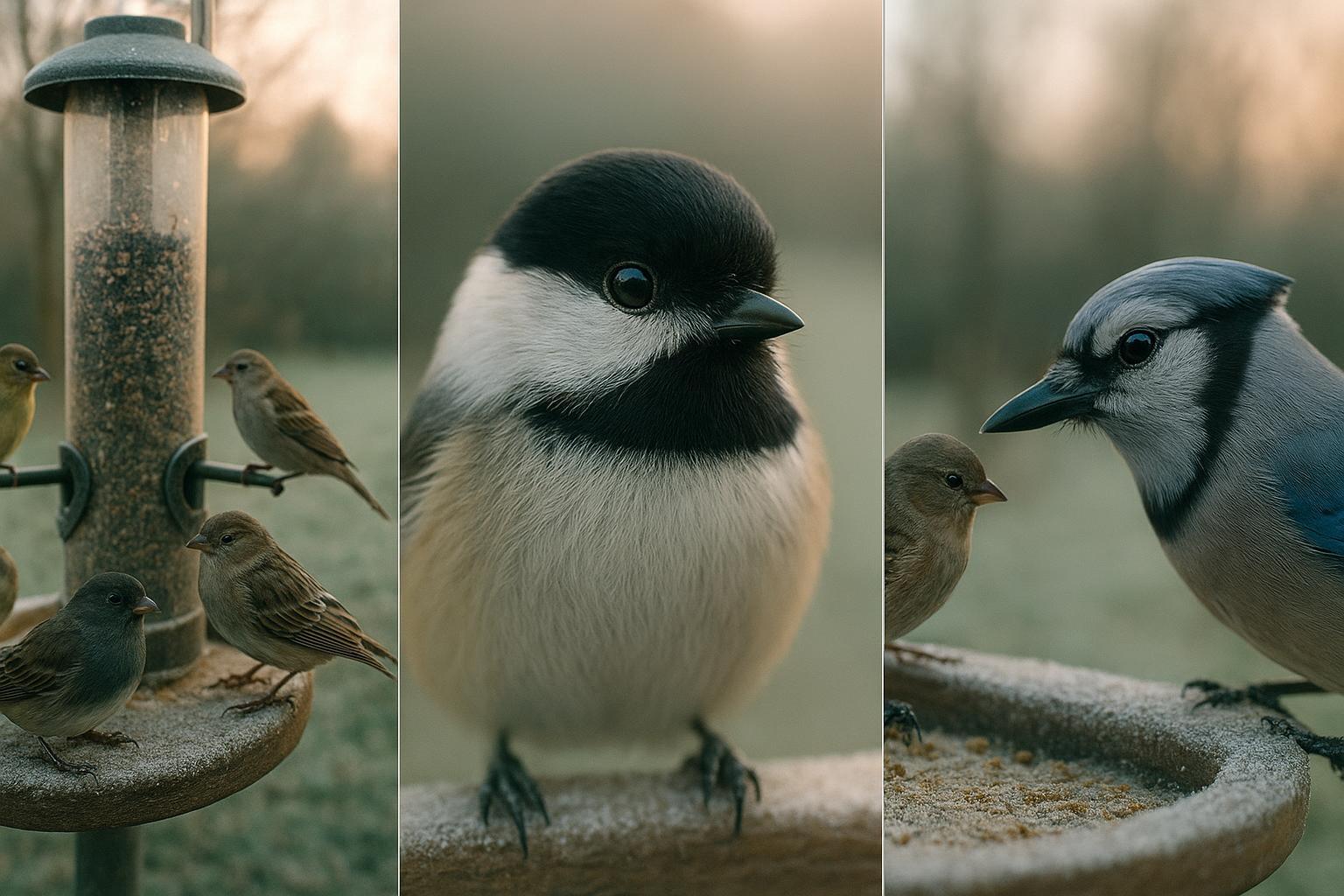
I used to think birds politely took turns at my feeder. Then I started reviewing clips and realized how much I’d been missing: a nuthatch shouldering past a finch just out of frame, a jay landing off to the side before sweeping in, a chickadee darting from a lower perch the moment a sparrow hesitated. One single camera gave me highlights. Multi-angle capture told the whole story.
Key takeaways
If you care about behavior—who lands first, who gets displaced, whether there’s a repeatable order—multi-angle (dual or triple) capture reduces blind spots and changes what you can actually observe.
For most beginners who want low maintenance and lower cost, a single-camera setup with good day image quality and optional solar is still a solid choice.
The biggest trade-off with multiple lenses is power: more angles mean more recording and shorter battery life, plus higher upfront cost and slightly more setup.
In low light (pre-dawn, winter), pairing a wide view with a close-up lens often yields more usable frames than one lens alone, especially when birds arrive from different directions.
The question “single vs triple camera bird feeder” isn’t just about specs—it’s about how much of the interaction you want to capture in crowded moments.
Methods, scope, and disclosure (2026)
We ran matched yard tests over several weeks, logging arrival sequences, displacement events, and missed clips due to occlusion. We mounted each feeder at the same height and used a separate, fixed reference camera to establish ground truth. We cataloged low-light performance at dawn and dusk and noted battery drain under light vs heavy recording days. Availability and pricing are referenced as of January 2026.
Disclosure: Birdfy is our product. To keep this comparison useful for all readers, we apply the same evaluation fields and similar word counts across every product mentioned and link to original sources for time-stamped facts.
What multi-angle really reveals at the feeder
A single forward-facing view can make a busy feeding session look orderly. Add a second or third angle and the choreography emerges.
Arrival order: With overlapping frames, it’s easier to see “who actually touched down first.” A side or wide angle often reveals a jay staging on a nearby rail before the front lens sees it.
Displacement: Multi-angle clips show micro-movements—a head tilt, a puffed chest—right before one bird yields. Those cues often happen off-axis from a single lens.
Fixed order or not: Over repeated mornings, some yards do show a loose pecking order; others are chaotic. Multiple angles make it possible to verify patterns rather than guess.
Same-species hierarchy: Among finches and sparrows, tiny postural signals dictate access. A portrait/close-up angle catches those facial and shoulder cues better than a wide lens.
Interspecies avoidance: Side perches become “waiting rooms.” A multi-angle rig shows smaller birds holding off until a larger species departs, or sneaking in from below.
Why angles matter: occlusion and overlap. Think of a single lens like watching a doorway from the hallway—you see who steps through, not who’s hovering just to the side. Two or three angles extend the doorway into a foyer, so you catch the staging and the outcome.
Single vs triple camera bird feeder: trade-offs you’ll notice
Coverage and blind spots
Single-camera strengths: Simplicity, less to mount, fewer false triggers to tune. But in flock-heavy moments, one lens often misses the side-stage where the “decision” happens.
Multi-angle strengths: Far fewer blind spots and better anti-occlusion. Pairing a wide lens with a portrait/close-up or a side camera yields more complete sequences.
Low light and night vision realities
Most backyard action happens in daylight, but dawn matters. Multi-angle setups raise your odds of getting at least one crisp frame when shadows fall unevenly across the feeder.
Color night vision and higher frame rates can help pre-dawn clarity, but results vary by sensor and lighting. Independent roundups highlight variability; few quantify lux thresholds.
AI identification and trigger quality
More angles don’t guarantee better IDs, but they increase the chance that one view is sharp and centered. That, in turn, improves AI recognition and reduces mislabels.
Some systems add recap/highlight features and server-side AI that recognize thousands of species; others rely on simpler motion triggers or paid upgrades for bird-specific detection.
Battery life, solar, and maintenance cadence
Single-lens feeders often outlast multi-angle rigs between charges because they record fewer simultaneous clips. In heavy-action yards, multi-angle systems drain faster—plan on solar or a more frequent charging routine if you record a lot.
Cost and value over one to three years
Multi-angle hardware costs more up front. Over time, consider accessories (solar, spare batteries) and any optional subscriptions. If your main goal is crowd interactions, the extra context may be worth it. If you rarely see more than one bird at a time, single-lens value is hard to beat.
Snapshot comparison (2026) | Single-camera feeder | Multi-angle feeder (dual/triple) |
|---|---|---|
Coverage in busy sessions | Can miss side-stage arrivals; higher occlusion risk | Far fewer blind spots; simultaneous views capture staging + outcome |
Behavioral insight | Good for species ID and basic visits | Reveals arrival order, displacement, hierarchy, and avoidance |
Low-light odds of a usable frame | Dependent on one angle/sensor | Redundant angles improve chances one view is clean |
Battery/maintenance | Longer intervals between charges | Shorter intervals under heavy use; solar add-ons help |
Upfront + TCO | Lower upfront; fewer accessories | Higher upfront; plan for power accessories and possible subscriptions |
Products that represent each approach (2026)
Below, each capsule uses the same fields for fairness. Links go to official sources or primary coverage with dates.
Birdfy Feeder 2 Duo — triple-perspective coverage
Evidence: Official product pages note a front dual-lens (1080p wide + 2K portrait) plus a 1080p side camera—three perspectives designed to minimize blind spots. App features include AI identification of 6,000+ species and Recap/Highlight tools, with free cloud clips (30-day retention). Sources: official product pages and support docs dated 2025–2026.
Specs: Wide 1080p + 2K portrait front lenses, plus 1080p side; weather-rated housing; optional solar bundles. Birdfy Feeder 2 Duo official
Pros: Excellent anti-occlusion; concurrent wide + close-up views aid behavior analysis; strong app workflow for collections/recaps.
Cons: Heavier recording can shorten time between charges; higher upfront price than single-lens feeders.
Who it’s for: Flock-heavy yards and anyone studying arrival order or displacement events.
Constraints: Requires careful placement to get optimal side coverage; more notifications unless tuned.
Pricing as of Jan 2026: Varies by bundle; solar options available.
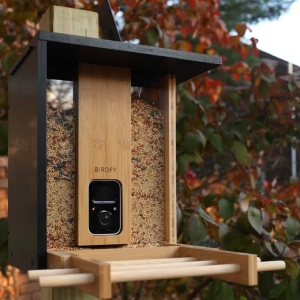
Birdfy Feeder 2 Pro — dual-lens wide + portrait
Evidence: Official pages describe a 1080p wide lens paired with a 2K portrait lens designed for detail and tracking. App and cloud details mirror the Duo’s core functions. Sources: official pages and support, 2025–2026.
Specs: 1080p wide + 2K portrait dual-lens; weather-resistant; optional solar. Birdfy Feeder 2 Pro official
Pros: Clean pairing for coverage + detail; fewer blind spots than single-lens; good slow-motion options for behavior clarity.
Cons: Shorter endurance versus single-lens in busy yards; costlier than budget single-cam options.
Who it’s for: Users who want multi-angle insight but prefer a simpler setup than a triple-perspective rig.
Constraints: Still more to configure than a single camera; best results with notification tuning.
Pricing as of Jan 2026: Varies by package.
Birdfy Feeder Vista — panoramic dual-cam (CES 2026)
Evidence: CES 2026 coverage confirms two cameras enabling 360° capture, 14MP stills, 6K video, and a bottom-up design to minimize self-occlusion, plus high-speed modes for behavior detail. Source: MacRumors (Jan 2026).
Specs: Dual-camera panoramic capture; 14MP stills; up to 6K video; 120-fps slow motion; bottom-up feed design. CES coverage of Birdfy Vista
Pros: Panoramic view reduces structural blind spots; high-resolution assets aid ID and behavior analysis.
Cons: New model availability/pricing may be pending; advanced features can increase power demands.
Who it’s for: Gear enthusiasts and educators wanting panoramic context with high-res evidence.
Constraints: Early availability; plan power carefully.
Pricing as of Jan 2026: Pending public retail listings.
Bird Buddy 2 — single-lens with integrated solar (CES 2026)
Evidence: CES 2026 reports describe 2K HDR video, a wider field of view than prior models, and dual integrated solar panels, with shipping starting February 2026 at $199. Source: MacRumors (Jan 2026).
Specs: 2K HDR camera, dual solar, improved enclosure. MacRumors on Bird Buddy 2
Pros: Strong single-lens value with integrated solar; simple maintenance.
Cons: Single angle can miss staging/side arrivals; AI features depend on the app and settings.
Who it’s for: Beginners who want a clean, low-maintenance setup with decent image quality.
Constraints: Still a single perspective; behavior sequences may be incomplete.
Pricing as of Jan 2026: $199 (announced), shipping starting Feb 2026.
Perky-Pet Smart Camera Feeder (SPCAM) — budget single-lens
Evidence: Official page lists a 1080p camera, motion alerts, 110° FOV, night vision, and a 3.5 lb seed capacity, with a special price shown at $129.99 as of early Jan 2026.
Specs: 1080p camera, 110° FOV, night vision, 4000 mAh battery. Perky-Pet official SPCAM page
Pros: Low cost, simple to mount; decent for daytime identification.
Cons: Limited detail at distance; higher chance of occlusion in busy sessions.
Who it’s for: Budget-focused buyers and light-traffic yards.
Constraints: Battery size may limit endurance in high-traffic yards; app feature set is basic.
Pricing as of Jan 2026: $129.99 (special); retailer prices vary.
Wyze feeder accessory + camera — modular single-lens
Evidence: Wyze sells a feeder accessory that pairs with Wyze Cam v4 (2.5K QHD, color night vision) or Battery Cam Pro; bird detection on the battery model may require a subscription. Source pages updated through 2025.
Specs: Cam v4 (wired, 2.5K, color night vision) or Battery Cam Pro (wireless, AI with subscription); feeder accessory sold separately. Wyze feeder and camera pages
Pros: Flexible pricing and camera choices; wired option means no charging.
Cons: Single angle; battery model’s best AI features sit behind a paid plan.
Who it’s for: Tinkerers who want modular options or already own Wyze cams.
Constraints: Mixing accessory + camera can be fiddly; weatherproofing depends on the specific camera.
Pricing as of Jan 2026: Accessory ~ $39.99–$49.99; bundle prices vary.
Quick picks: choose based on your yard and goals
If your yard gets flocks and you care about who lands first or who gets displaced: choose multi-angle (dual or triple perspective).
If you want the lowest maintenance and cost: pick a single-camera feeder with solar, accept occasional blind spots.
If kids are doing school projects: pair a wide view with a close-up to ensure both context and detail; recap/highlight features help presentation.
If winter dawns dominate your viewing: look for higher sensitivity sensors, color night options, or high frame rates—and consider multi-angle redundancy.
How to choose the right feeder camera setup
Start with the primary decision factor: coverage. Ask yourself, “Do I mainly want clean portraits and species IDs, or do I want to understand the small politics at my feeder?” If it’s the latter, multi-angle is especially well-suited—and it’s why the single vs triple camera bird feeder question matters more in flock-heavy yards.
Then weigh the secondaries:
Low light: Pre-dawn visits benefit from redundancy and higher frame rates; color night vision can help but varies by model.
AI and triggers: Consistent bird-specific detection reduces false alerts and improves clip quality; app workflows for highlights/recaps make sharing easier. For a deeper dive into AI and app workflows, see the support overview of the Birdfy App’s features and Recap.
Power plan: Estimate how many daily clips you’ll record and whether solar makes sense. Busy yards shorten battery intervals—plan accordingly.
Cost over time: Price the feeder, accessories, and any optional subscriptions for one to three years. If your yard is quiet, the single-lens value proposition is strong. If it’s busy, the added context from multi-angle capture may be the only way to answer “who really runs this perch.”
Here’s the deal: single-lens feeders will get you solid moments; multi-angle rigs let you piece together the full sequence—who staged, who yielded, and whether the same pattern repeats day after day. If that story matters to you, the extra angle (or two) does, in fact, matter.
Ready to Get Started?
Join thousands of readers and get the latest content and insights in robot manufacturing.
Join Now